SS Sapona
Cargo Steamer · United States · Lost 1926 · The Bahamas
A WWI concrete cargo ship turned Prohibition rum warehouse, wrecked by a 1926 hurricane and left as one of the Bahamas' most iconic shallow dive sites.
Bruce Michael Bodiford
See Shipwreck on Map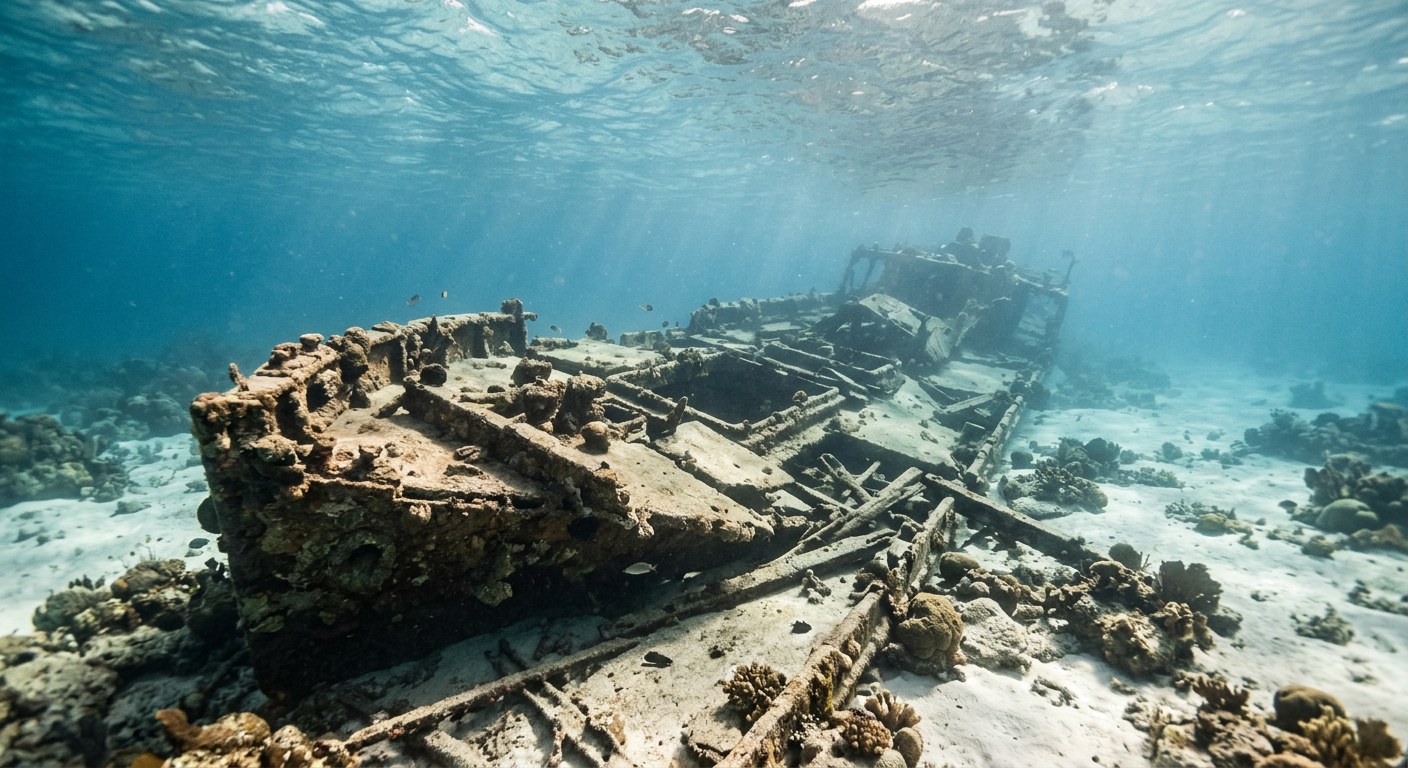
The Vessel and Her Loss
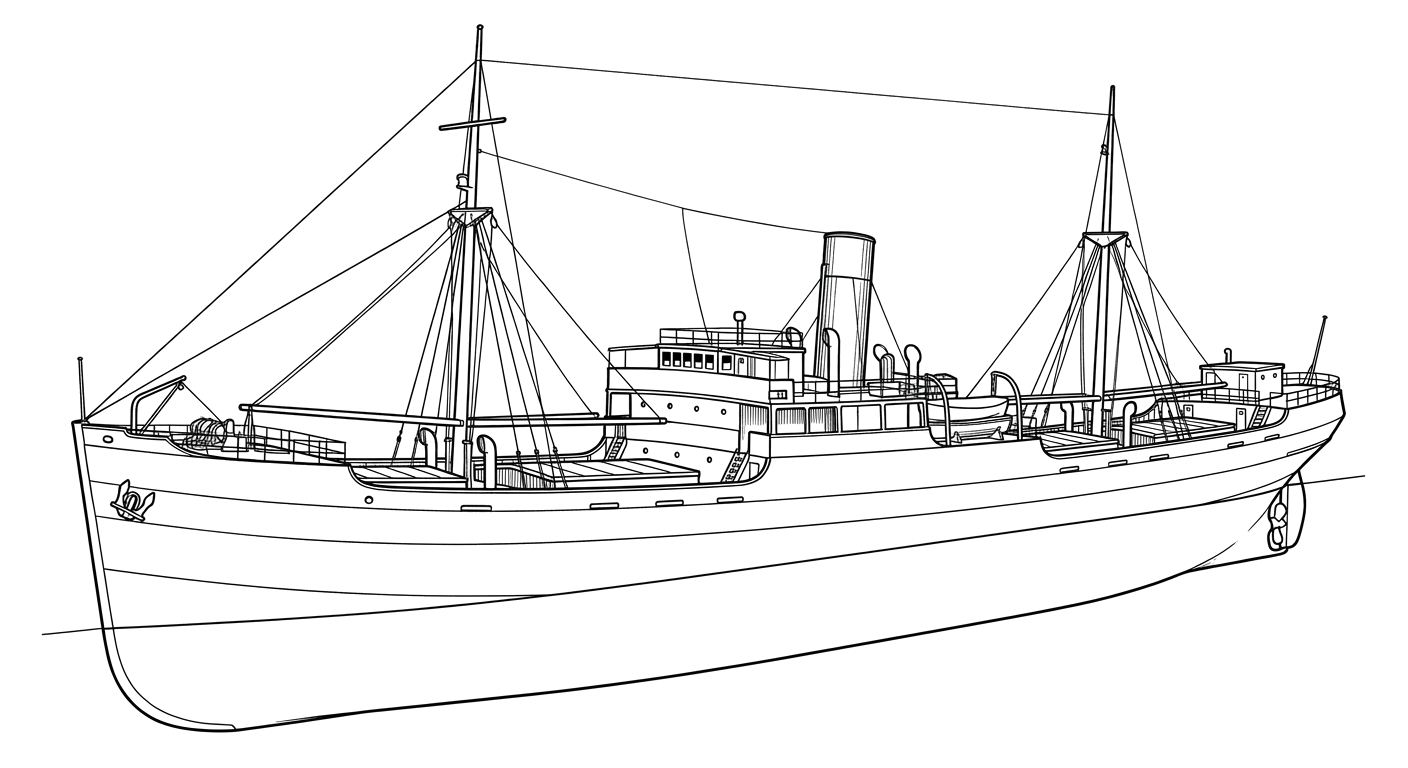
Sapona was one of a small fleet of ferrocement cargo steamers built for the US Shipping Board near the end of World War I, too late for wartime service. After a brief working life and use as an oil-storage hulk in Miami, she was bought in 1924 by rum-runner Bruce Bethel and towed to Bimini as a floating liquor warehouse during Prohibition. A hurricane drove her onto a shallow bank in 1926, breaking her hull and ending any further commercial use. During World War II the grounded hulk served as an aerial bombing target before practice runs against her were halted.
Vessel
- 1920
- US official number 219402; code letters LVDC
- Liberty Shipbuilding Company
- Wilmington, North Carolina
- Concrete (ferrocement, reinforced)
- 281 ft
- 46 ft
- 2795
- Triple-expansion steam, single screw
- United States Shipping Board (1919-1924); Carl G. Fisher (1924); Bruce Bethel (1924-1926)
Loss
- September 18, 1926
- Storm
- Near South Bimini, Bahamas
- Great Bahama Bank
- Not established
- Stored liquor stock (Prohibition-era warehouse ship)
- Not established
- No casualty figures for the grounding itself are established in the sources reviewed.
- Not established
The Wreck Today
- 10-20
- Broken and partially above water; concrete hull stripped by decades of storms and wartime bombing practice
- Not established
- Not established
- Not established
Position
- 25.651° N 79.293° W
- Surveyed position
- South Bimini
Position widely published, including by Wikipedia's coordinate listing citing surveys of the visible wreck.
Evidence
Overall confidence: Documented (85/100)
Precise casualty and salvage details of the 1926 grounding are not established in the sources reviewed.
Build data, ownership chain, dimensions, coordinates.
Bahamas.com (official Bahamas tourism site)
Loss narrative, Bethel ownership, wartime target use.
Construction details and dimensions.