Del Norte
Side-Wheel Steamer · United States · Lost 1868 · The British Columbia Coast
San Francisco's first significant ocean steamship, the side-wheeler Del Norte ran aground in dense fog in Porlier Pass in 1868 and now lies with her paddle wheels and boilers largely intact.
Become Captain of RecordSee Shipwreck on Map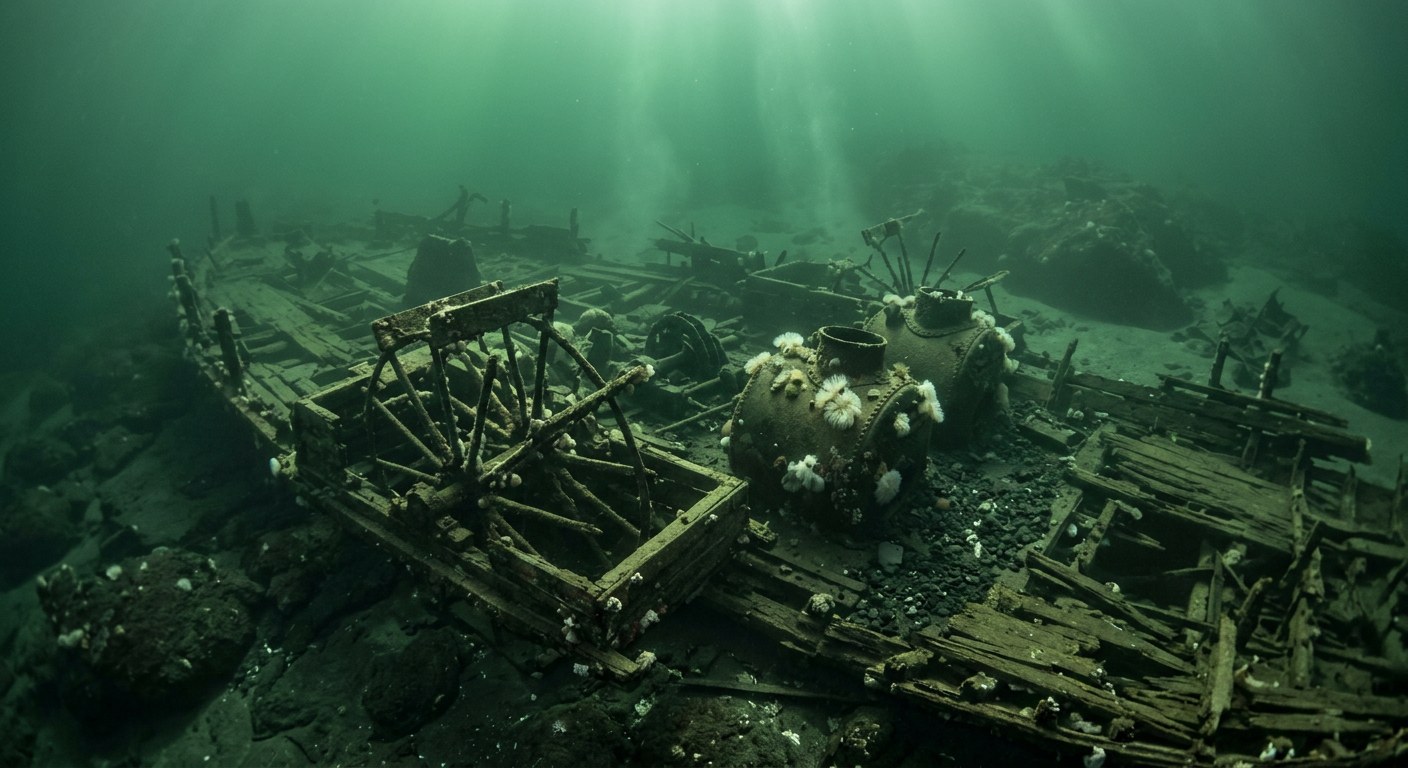
The Vessel and Her Loss
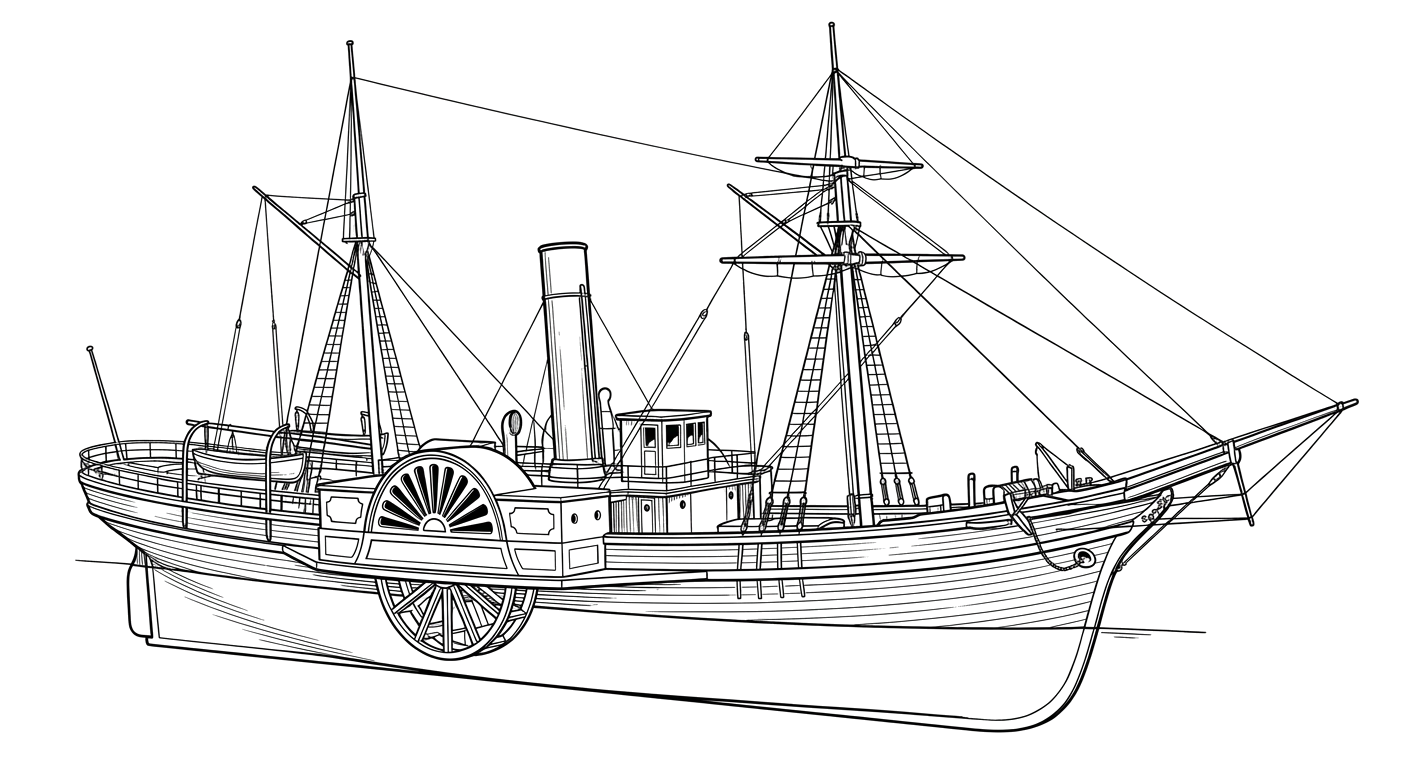
Del Norte, launched in 1865 and said to be the first ocean steamship of significance built in San Francisco, ran the Pacific coastal trade between San Francisco and Alaska. On a return voyage from Sitka in September 1868, she ran aground in dense fog in Porlier Pass, between Galiano and Valdes Islands, British Columbia. All aboard were evacuated safely. The wreck was rediscovered by divers in 1971 and surveyed by the Underwater Archaeological Society of British Columbia in 1976, which installed a plaque to protect the site; her paddle wheel spokes and twin boilers remain visible today amid a field of coal.
Vessel
- 1865
- Not established
- San Francisco, California
- Wood
- 190 ft
- 45 ft
- Not established
- Steam, side paddle wheels
- North Pacific Transportation Company
Loss
- September 25, 1868
- Grounding
- Porlier Pass, between Galiano and Valdes Islands, British Columbia
- Strait of Georgia
- Sitka, Alaska → San Francisco, California
- Coal and general cargo
- Not established
- 0
- Not established
The Wreck Today
- Not established
- Paddle wheel spokes and double boilers remain largely intact, surrounded by a coal debris field
- Not established
- 1971
- Protected under British Columbia's heritage wreck legislation.
Position
- 49.01° N 123.59° W
- Approximate position
- Porlier Pass, Galiano Island, British Columbia
General position within Porlier Pass; not a precisely surveyed coordinate.
Evidence
Overall confidence: Documented (75/100)
A precisely surveyed wreck coordinate was not confirmed in the sources reviewed.
Underwater Archaeological Society of British Columbia, The Foghorn newsletter
Build history, voyage, and grounding circumstances.
Tiare Boyes, BC Maritime History blog
Discovery date, discoverers, and present wreck condition.