Liberator
Freighter · United States · Lost 1942 · The Outer Banks
A former Navy troop transport returned to freight service and sank on Diamond Shoals after a 1942 torpedo attack.
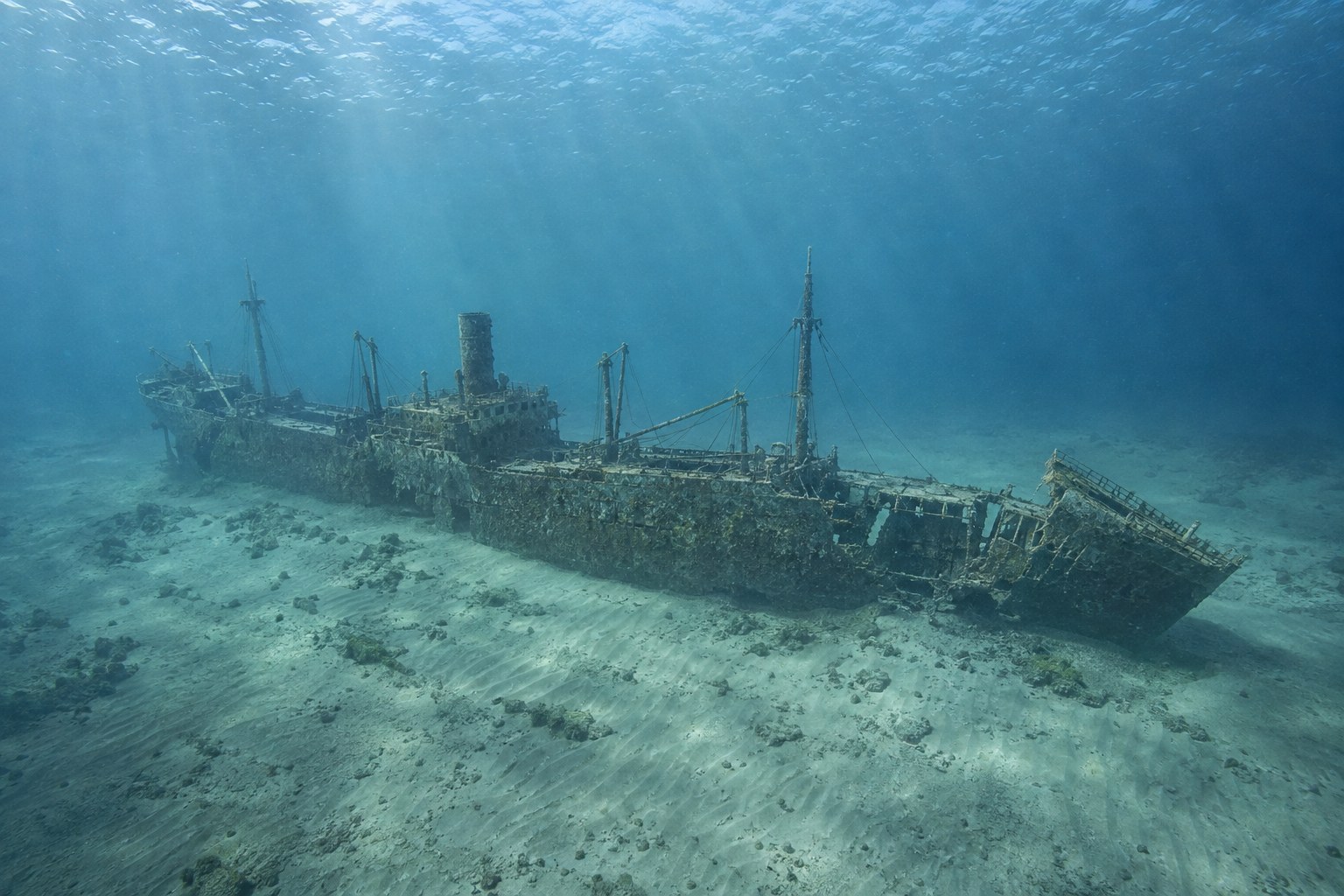
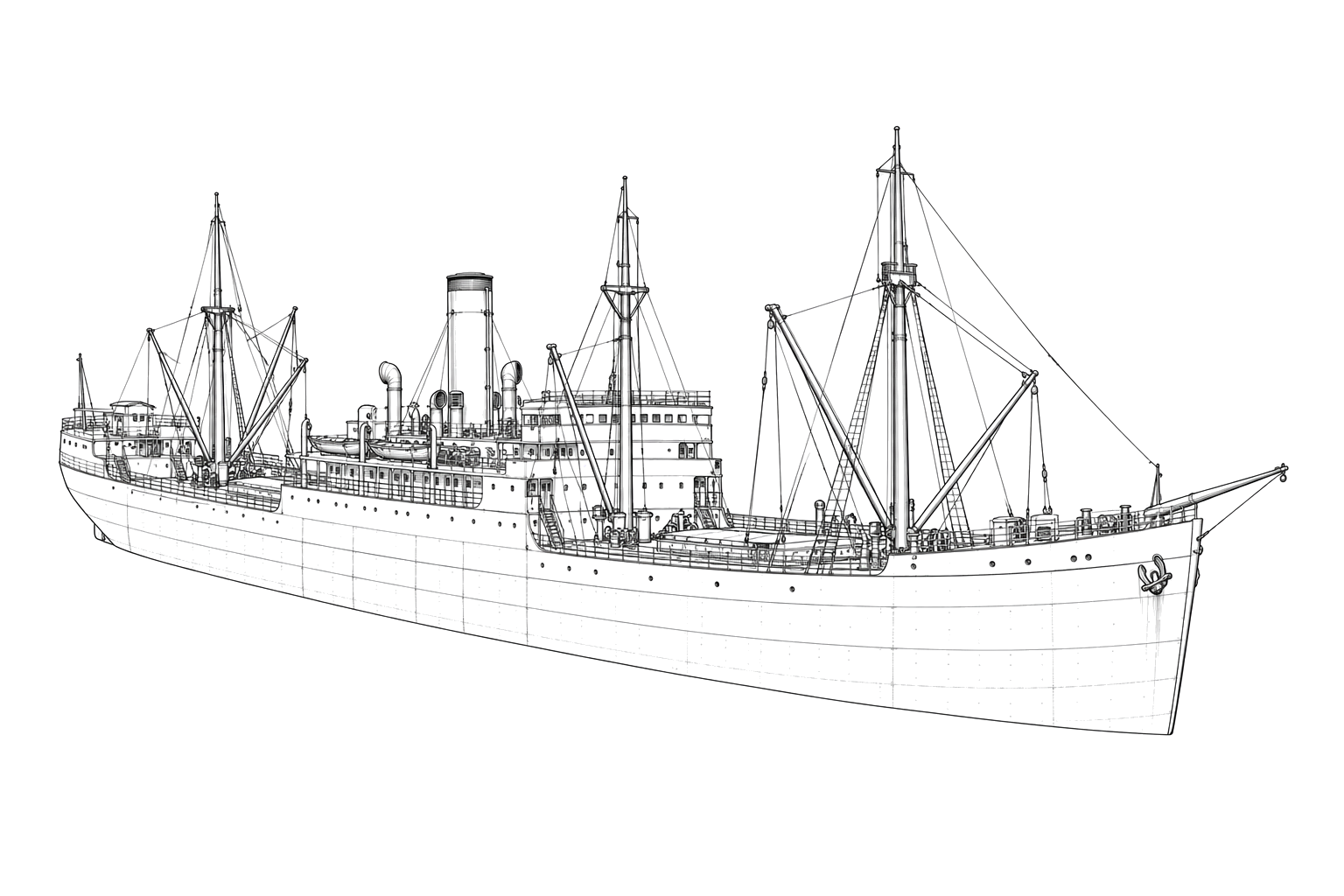
The Vessel and Her Loss
Built in 1918, Liberator served as USS Liberator, making five voyages bringing troops home from St. Nazaire, France. Decommissioned in 1919, it remained surplus until purchase and return to cargo service in 1933. By World War II it carried defensive guns and a naval gun crew. On the night of March 18, 1942, its crew mistook USS Dickerson for a U-boat and fired on the destroyer. The following morning U-332 torpedoed Liberator, igniting its sulfur cargo. Five of 36 aboard died, and USS Umpqua rescued the other 31.
Vessel
- 1918
- Hull no. 151
- Not established
- San Francisco, California (NOAA listing); fitting-out photograph caption specifies Alameda, California
- Steel
- 410 ft
- 56 ft
- 7,720 gross tons
- Three-cylinder triple-expansion steam engine; three boilers
- Lykes Brothers Steamship Company, Tampa, Florida
Loss
- March 19, 1942
- Enemy action
- Diamond Shoals, off North Carolina
- Atlantic Ocean
- Not established
- 11,000 tons of sulfur
- 36
- 5
- Not established
The Wreck Today
- 120 ft
- Broken into several sections; major hull section and separated bow lie on their starboard sides, with relief reaching 30 feet above the seabed.
- Bow section faces aft relative to the principal wreck section.
- Not established
- Not established
Position
- 35.08° N 75.39° W
- Approximate position
- Diamond Shoals, North Carolina
NOAA Ship Stats position agrees with its DMS representation. The site has been surveyed, but this published location is retained as approximate, not an accuracy-certified fix.
Evidence
Overall confidence: Well documented (90/100)
The final loss and surveyed wreck are well documented; the published position is approximate and NOAA’s builder attribution needs verification.
NOAA Monitor National Marine Sanctuary — Liberator
Full institutional narrative, ship statistics, registry (not home port), service, final casualty, archaeological evidence and viewed historical vessel photograph.